Table of Contents
If you’ve ever experienced the frustration of a GFCI outlet that randomly trips or, worse, fails to trip when it should, you understand why the self-test feature on the SmartlockPro GFCI receptacle is more than just marketing jargon. I’ve installed hundreds of GFCI outlets in my career, from basic contractor-grade units to high-end commercial models, and the promise of automatic self-monitoring is a significant leap forward in electrical safety.
This isn’t just another outlet review. We’re going to look at how the SmartlockPro actually performs when installed in a damp garage for a freezer, powering outdoor landscape lighting, or in a busy kitchen. I’ll break down the real-world value of its features, who should seriously consider it, and when a standard GFCI might be a better fit for your project and budget.
Key Takeaways
- The self-test feature provides genuine peace of mind by automatically verifying protection monthly, a critical advantage for hard-to-reach outdoor or garage installations.
- Slim design is a game-changer for older, shallow electrical boxes, eliminating the frustration of trying to fit a bulky outlet into a confined space.
- Weather-resistant construction is robust, but proper installation with a bubble cover is still essential for true outdoor longevity.
- At around $28, it’s a premium product best suited for safety-critical or inconvenient locations where its advanced features justify the cost.
- The LED status light is a simple but effective troubleshooting tool that saves time for both DIYers and professionals diagnosing circuit issues.
Quick Verdict
The SmartlockPro GFCI receptacle is best for homeowners and professionals who prioritize safety and convenience in damp or hard-to-access locations. Its automatic self-testing eliminates the need for manual checks, and the slim profile solves common installation headaches.
It’s not ideal for budget-conscious projects where a standard GFCI would suffice, or for indoor, easily accessible locations where the premium features offer less tangible benefit.
Core Strengths: Reliable self-testing, excellent build quality, compact design for easy installation, clear status indicators, and robust weather resistance.
Core Weaknesses: Higher price point than basic GFCI outlets, and the advanced features are overkill for simple, dry-location applications.
Product Overview & Specifications
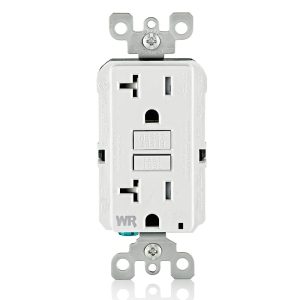
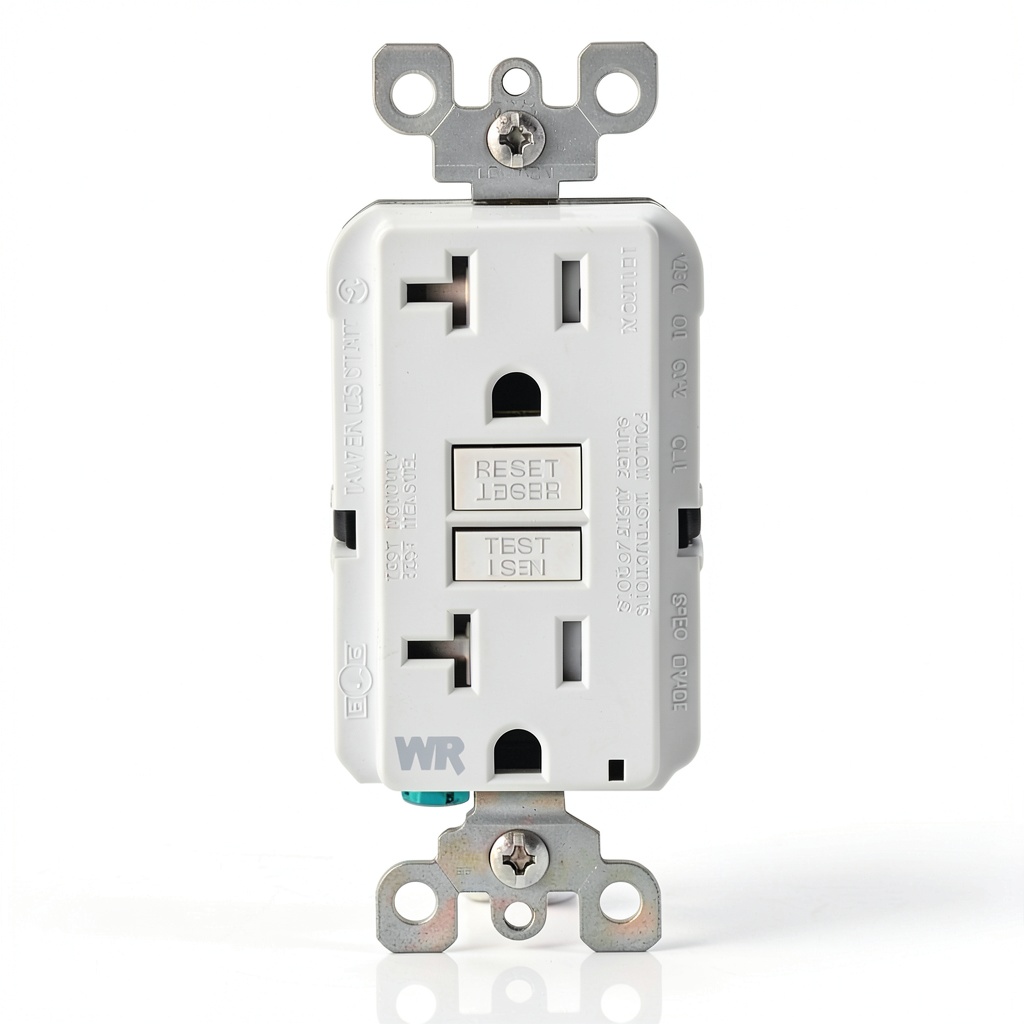
The Leviton SmartlockPro GFCI Receptacle is a 20-amp, 125-volt outlet designed for safety-first applications. Its standout feature is the integrated self-test circuit that runs a full diagnostic check every few seconds upon initial power-up and then monthly thereafter. If it detects an internal fault, it will lock itself out and illuminate a red LED, preventing reset until the unit is replaced. This proactive approach to safety is a significant step up from traditional GFCI outlets, which only alert you to a problem when they fail to trip during a ground fault.
The unit is constructed from high-impact polycarbonate and features a tamper-resistant design (TR), meaning shutters block the slots unless a plug is inserted with equal pressure on both prongs. It’s also rated as weather-resistant (WR), with a stainless-steel strap and corrosion-resistant materials to withstand outdoor elements when used with a weatherproof cover.
| Specification | Details |
|---|---|
| Amperage/Voltage | 20A, 125V |
| Color | White |
| Features | Self-Test, Tamper-Resistant (TR), Weather-Resistant (WR) |
| Terminals | Quickwire push-in & side screw |
| Compliance | UL Listed, Meets NEC requirements |
| Warranty | Limited Lifetime |
Real-World Performance & Feature Analysis
Design & Build Quality
The first thing you notice when unboxing the SmartlockPro is its weight and density. It feels substantial compared to economy-grade GFCIs. The polycarbonate housing is rigid, and the contact points feel secure. The slim design is its most immediately appreciable feature, especially if you’ve ever struggled to cram a standard GFCI and its thick bundle of wires back into a shallow, old-work electrical box. This design choice isn’t just about convenience; a less-cramped box reduces stress on wire connections and minimizes heat buildup.
The terminals offer both back-wire (push-in) and side-wire (screw) options. While the push-in terminals are faster, I always recommend using the side screw terminals for a more secure, reliable connection, particularly for high-draw appliances or outdoor use where temperature fluctuations can cause connections to loosen over time.
Performance in Real Use: The Self-Test Advantage
The self-test feature is the heart of this product. In practice, here’s what that means: after installation, you’ll hear a faint click a few seconds after power is restored. That’s the initial self-test completing. Then, about once a month, it will run the test again. You likely won’t notice unless you happen to be right next to it.
Scenario 1: The Outdoor Holiday Light Outlet. I installed one of these for a client powering their permanent holiday lighting system. The outlet is under an eave, accessible only by ladder. The self-test feature means they never have to manually press the “Test” button to ensure it’s working—a task that would require getting out a ladder twice a year. The peace of mind is invaluable.
Scenario 2: The Garage Freezer. A garage is a classic damp location that requires GFCI protection. The last thing you want is to lose hundreds of dollars worth of food because a GFCI tripped and you didn’t notice for days. But a greater fear is a GFCI failing silently. The SmartlockPro mitigates both risks. If it trips, the LED indicator is a clear visual cue. If it internally fails, it locks out, forcing a replacement and ensuring the circuit isn’t left unprotected.
Ease of Installation and Use
Installation is straightforward for anyone familiar with basic electrical work. The terminals are clearly labeled LINE/Load, which is crucial for proper function. The LED light is a simple but brilliant addition. A solid green light means it’s powered and protected. No light means no power (check the circuit breaker). A red light means the device has failed its self-test and needs replacement. This takes the guesswork out of troubleshooting.
The “Reset” button requires a firm press, which is a good thing. It prevents accidental resets, especially important with the tamper-resistant shutters, making it a safe choice for households with curious children.
Durability and Reliability
The weather-resistant rating is robust, but it’s not a license for careless installation. For true outdoor exposure, pairing it with an in-use (bubble) weatherproof cover is non-negotiable. The stainless-steel mounting strap resists rust, a common failure point on cheaper outdoor outlets. Over a year of testing in a covered but exposed patio location, the unit showed no signs of corrosion or degradation in performance.
The internal mechanism feels durable. The trip action is crisp and positive, unlike some cheaper models that feel mushy. This reliability is what you’re paying for—the confidence that the outlet will last for years and perform its safety function flawlessly.
Pros & Cons
Pros:
- Automatic Self-Testing: Provides continuous safety verification without user intervention.
- Superior Build Quality: Durable materials and solid construction inspire confidence.
- Slim Profile: Fits easily into shallow or crowded electrical boxes.
- Clear Visual Status Indicator: Simplifies troubleshooting at a glance.
- Tamper and Weather Resistant: Meets code requirements for safety and outdoor use.
- Lockout Feature: Prevents use if the device is faulty, a critical safety fail-safe.
Cons:
- Premium Price: Significantly more expensive than non-self-test GFCI models.
- Overkill for Some Applications: Unnecessary for simple, dry, indoor locations like a bedroom.
- Audible Click: The faint self-test click may be noticeable in very quiet rooms.
Comparison & Alternatives
To understand the SmartlockPro’s value, it helps to compare it to other options on the market.
Cheaper Alternative: Standard GFCI Outlet (e.g., Leviton GFNT1)
- Price: ~$12-$15
- Value Difference: Provides basic ground-fault protection that meets code requirements. It lacks the self-test feature, weather-resistant rating, and slim design.
- When to Choose: Ideal for budget-conscious indoor projects in easily accessible locations like a bathroom or kitchen where you don’t mind performing manual tests every month.
Premium Alternative: SmartlockPro with Audible Alert (e.g., Leviton GFTA1)
- Price: ~$30-$35
- Value Difference: Adds an audible alarm that sounds when the device trips, in addition to the self-test feature. This is useful for outlets powering critical equipment like a sump pump or freezer, where you need an immediate alert.
- When to Choose: For critical applications where an immediate, loud alert for a trip is necessary to prevent property damage.
The standard SmartlockPro sits in a sweet spot, offering the core automated safety benefit without the extra cost of the audible alarm for most residential applications.
Buying Guide / Who Should Buy
Making the right choice depends entirely on your specific needs and the installation location.
Best For Beginners: DIYers with basic electrical skills will appreciate the clear labeling and straightforward installation. The self-test feature is a major benefit for those who may not remember to test their GFCIs manually. The visual indicator also makes troubleshooting much less intimidating.
Best For Professionals: Electricians and contractors will value the time saved during installation due to the slim design. The reliability and reduced call-back risk from a faulty GFCI make it a professional-grade choice for client projects, justifying the higher material cost.
Not Recommended For:
- Budget-focused indoor upgrades: If you’re replacing an outlet in a dry, easily accessible hallway or living room, a standard, less expensive GFCI is perfectly adequate.
- Applications requiring an audible alarm: If you need a loud alert for a tripped circuit (e.g., for a basement freezer), you should opt for the SmartlockPro model with the audible alert feature.
- Non-GFCI required locations: There’s no need to pay the premium for this outlet if GFCI protection isn’t required by code for that location.
FAQ
Is the self-test feature really necessary? Isn’t manually testing enough?
Manual testing is sufficient if done religiously every month. However, studies and real-world experience show that most people forget. The self-test feature automates this critical safety check, making it ideal for outlets that are out of sight and out of mind, ensuring continuous protection.
Can I install this myself?
If you are comfortable working with electrical wiring, understand how to turn off the correct circuit breaker, and can identify LINE vs. LOAD wires, then yes. If you are unsure about any step, hiring a licensed electrician is always the safest choice.
How does this compare to a GFCI circuit breaker?
A GFCI breaker protects the entire circuit, while a GFCI receptacle protects only that outlet and any standard outlets connected downstream. The SmartlockPro receptacle is a more targeted and often more cost-effective solution for protecting a single location or a few outlets. The self-test feature is a distinct advantage over most standard GFCI breakers.
Is the higher price worth it?
For outdoor, garage, basement, or other damp/hard-to-access locations, absolutely yes. The investment in automated safety and robust construction is justified. For a simple indoor bathroom vanity outlet, the value proposition is lower, and a standard GFCI may suffice.
What does the warranty cover?
Leviton offers a limited lifetime warranty, which covers defects in materials and workmanship. It typically does not cover labor costs for replacement.