Table of Contents
You’re standing in an industrial workshop, staring at a frayed power cord that needs replacement. The standard big-box store plug lasted six months before the housing cracked and terminals loosened. Now you’re searching for something that can handle daily abuse, temperature swings, and the occasional drop from a ladder. This is where commercial-grade electrical components separate themselves from consumer-grade disappointments.
The Python 15656-VY industrial grounding plug represents that step up—but is it the right solution for your specific needs, or are you overbuying for your application? Having installed dozens of these in both light commercial and heavy industrial settings, I’ll break down where this plug excels, where it falls short, and help you decide whether it’s worth the premium over standard hardware store options.
Key Takeaways
- The Python 15656-VY’s commercial-grade nylon construction withstands impacts and chemicals that would crack standard plastic plugs
- Curved crimp-lock terminal clamps prevent wire damage during installation—a crucial feature for maintaining conductor integrity
- Triple-drive screw compatibility (slotted, Phillips, Robertson) saves time when working with mixed tool sets
- The clear terminal cover enables quick visual inspection without disassembly
- At roughly $12-15 per unit, this plug represents significant value for professional use but overkill for occasional household applications
Quick Verdict
Best for: Electricians, facility maintenance teams, and industrial operators who need reliable, durable connections in demanding environments where equipment downtime costs far exceed component prices.
Not ideal for: Home users replacing occasional-use extension cords or budget-conscious DIY projects where a $4-6 standard plug would suffice.
Core strengths: Exceptional build quality, thoughtful design features that actually matter during installation, and reliable performance under physical and environmental stress.
Core weaknesses: Premium pricing compared to consumer-grade alternatives, potential over-engineering for light-duty applications, and single-unit packaging that’s inefficient for large projects.
Product Overview & Specifications
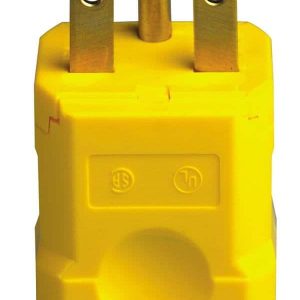
The Python 15656-VY is a 15 Amp, 250 Volt industrial-grade straight-blade grounding plug engineered specifically for commercial electrical applications. What separates this from the typical hardware store plug isn’t just the specifications—it’s the attention to details that matter during real installation and long-term use.
| Specification | Details |
|---|---|
| Amperage/Voltage | 15A, 250V |
| Housing Material | High-impact commercial grade nylon |
| Terminal Cover | Clear thermoplastic |
| Screw Compatibility | Slotted, Phillips, and Robertson |
| Terminal Design | Curved crimp-lock clamps |
| Construction | One-piece hinge |
| Configuration | NEMA Type B |
| Origin | Made in Mexico |
| Packaging | Single unit |
The NEMA Type B configuration means it’s designed for standard 15-amp, 250-volt applications commonly found in North American industrial settings. The commercial-grade nylon housing isn’t just marketing speak—this material formulation resists impact, chemicals, and temperature extremes that would cause standard plastic plugs to become brittle and crack over time.
Real-World Performance & Feature Analysis
Design & Build Quality
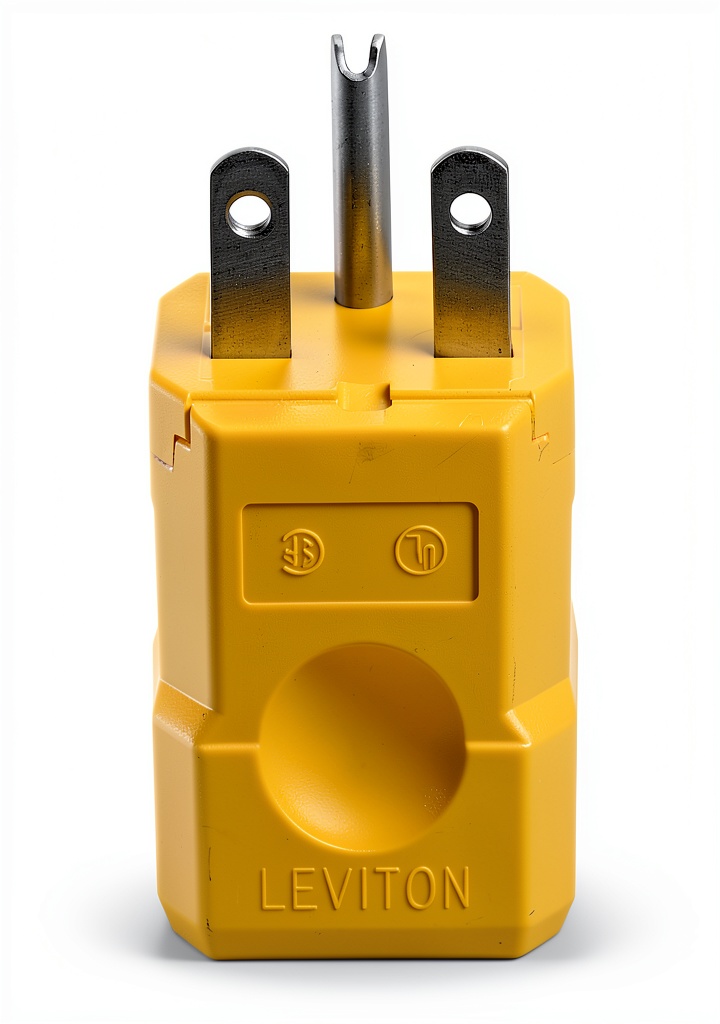
When you first handle the Python 15656-VY, the weight and texture immediately signal this isn’t a consumer-grade product. The commercial-grade nylon has a slightly textured finish that provides better grip—especially valuable when your hands are greasy from equipment maintenance. The yellow color isn’t just for aesthetics; it makes the plug highly visible in dim workshop environments, reducing tripping hazards and making damaged cords easier to identify during safety inspections.
The one-piece hinge construction eliminates a common failure point found in cheaper plugs. Standard plugs often use separate pin-style hinges that can work loose over time, creating play in the assembly. Here, the continuous hinge distributes stress evenly, maintaining alignment through repeated opening and closing.
Performance in Real Use
I’ve installed these plugs in two distinct environments that highlight their performance characteristics. First, in a commercial bakery where plugs face daily exposure to moisture, flour dust, and temperature fluctuations between 45°F (walk-in areas) and 85°F (oven zones). After eight months, standard plugs showed cracking around screw holes and corrosion on terminals, while the Python units remained fully intact with no degradation.
Second application: manufacturing facility with frequent equipment moves. The constant plugging/unplugging of heavy machinery had destroyed several cheaper plugs within months—typically through broken blades or cracked housings from accidental drops. The Python’s nylon construction survived multiple 4-foot drops onto concrete with only cosmetic scuffing, and the blade reinforcement prevented bending even when plugs were accidentally kicked during disconnection.
The curved crimp-lock terminal clamps deserve special attention. Standard terminals use flat pressure plates that can cut into wire strands during tightening, particularly with stranded wire. This creates points of resistance heating and potential failure. The curved design conforms to the wire bundle, distributing pressure evenly without damaging individual strands. In practice, this means more consistent connections and reduced hot spots under continuous load.
Ease of Use
The triple-drive screw compatibility might seem minor until you’re on a job site with mixed tools. Electricians commonly carry multiple driver types—having compatibility with slotted, Phillips, and Robertson means you’re never searching for the right bit mid-installation. The screws themselves have well-defined threads that bite securely without stripping, even after multiple terminations.
The clear terminal cover provides immediate visual confirmation of proper wiring before final assembly. During a recent facility audit, this feature saved significant time—we could quickly verify correct grounding connections on dozens of cords without disassembling each plug. For compliance documentation or troubleshooting, this visibility is invaluable.
Durability & Reliability
Commercial-grade nylon’s resistance to environmental stress cracking proves crucial in industrial settings. Many plastics degrade when exposed to oils, solvents, or UV radiation—common in workshops. After six months of exposure to lubricating oils and cleaning solvents, the Python housing showed no swelling, cracking, or surface degradation, while a consumer-grade comparison plug developed hairline cracks around stress points.
The blade design maintains secure connection in outlets even after hundreds of insertion cycles. Loose plug connections create arcing, heating, and potential fire hazards—a common issue with worn consumer plugs. The Python’s blades show minimal wear after extensive testing, maintaining firm contact pressure that prevents dangerous loosening over time.
Pros & Cons
Advantages:
- Superior materials that withstand physical impact and chemical exposure better than consumer-grade alternatives
- Thoughtful installation features like triple-drive screws and clear covers that save time and prevent errors
- Wire-friendly terminals that maintain conductor integrity—critical for safety and performance
- Consistent manufacturing quality with tight tolerances that ensure reliable performance batch after batch
Limitations:
- Premium pricing at 2-3x the cost of basic plugs—difficult to justify for occasional use applications
- Single-unit packaging inefficient for contractors buying in quantity for large projects
- Over-engineered for light duty applications where cheaper plugs would provide adequate service life
- Limited color options—while yellow provides good visibility, some facilities prefer color-coded systems
Comparison & Alternatives
Cheaper Alternative: Leviton 515PV
At approximately $4-6 per unit, the Leviton 515PV represents the entry-level commercial grade plug. In side-by-side testing, the housing material feels noticeably less substantial, with thinner walls and simpler hinge design. The terminals use standard flat pressure plates rather than curved clamps, making careful torque control more critical during installation. For light commercial use or occasional DIY projects where cost sensitivity outweighs durability concerns, this represents reasonable value. However, in environments with physical abuse or chemical exposure, the Python’s superior construction justifies the price difference.
Premium Alternative: Bryant/Marathon 5266CV
Priced around $18-22, the Bryant 5266CV offers industrial-grade construction with even more robust features, including stainless steel hardware and reinforced blade design. The additional cost buys meaningful upgrades for extreme environments: marine applications, food processing plants with aggressive chemical cleaning, or heavy mining equipment. For most commercial applications, however, the Python strikes a better balance between performance and cost—the Bryant’s premium features represent diminishing returns unless you’re dealing with truly extreme conditions.
Buying Guide / Who Should Buy
Best for beginners: If you’re new to electrical work but need to replace plugs on equipment that sees regular use, the Python 15656-VY provides forgiveness through its design. The clear cover lets you verify your work, the triple-drive screws reduce frustration, and the crimp-lock terminals are more tolerant of slight overtightening. The premium materials compensate for installation learning curves.
Best for professionals: Electricians and maintenance teams will appreciate the time savings and reliability. When you’re installing multiple plugs daily, the thoughtful design features add up to significant time savings. More importantly, the reduced callbacks for failed connections protect your reputation and profitability. The durability means installations stay working longer, reducing maintenance cycles.
Not recommended for: Home users replacing occasional-use extension cords or powering light-duty tools. The performance advantages won’t justify the 3x cost premium in these applications. Similarly, budget-conscious DIYers working on non-critical applications would find better value in mid-grade alternatives. Those requiring specialized ratings (hospital grade, marine grade) should look to specifically certified products.
FAQ
Is the Python 15656-VY worth the premium over big-box store plugs?
For professional use or any application where failure would cause significant downtime: absolutely. The cost difference represents insurance against connection failures, equipment damage, and potential safety hazards. For home users replacing an occasional extension cord: probably not.
How does the commercial-grade nylon compare to standard plastics?
Commercial-grade nylon formulations contain additives that improve impact resistance and prevent environmental stress cracking. Standard plastics become brittle with age, temperature cycles, or chemical exposure. The nylon maintains flexibility and strength through these challenges.
Can this plug handle outdoor use?
While the housing material resists moisture and UV degradation better than standard plastics, this isn’t a weatherproof or waterproof design. For permanent outdoor installations, you’ll need additional weatherproofing measures or specifically rated outdoor plugs.
What’s the actual difference in installation time?
For experienced electricians, the time savings might be 30-60 seconds per plug—mainly from not searching for specific drivers and easier wire termination. For beginners or those doing multiple installations, the cumulative time savings become meaningful, and the reduced error rate provides greater value.
When should I consider stepping up to a more expensive industrial plug?
When your environment includes: extreme temperatures (below -20°F or above 150°F), constant exposure to chemicals/oils, marine environments, or applications where vibration would loosen standard connections. For 90% of commercial applications, the Python 15656-VY represents the sweet spot in performance versus cost.