Table of Contents
When you’re setting up a professional presentation space, whether it’s a corporate boardroom, university lecture hall, or retail display, the wrong projector can undermine your entire investment. You’re not just buying a device that throws images on a wall—you’re investing in reliable communication technology that needs to work perfectly every time, without distracting technical issues or frequent maintenance headaches.
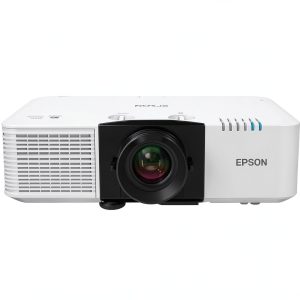
The Epson PowerLite L690U enters this space with a compelling proposition: laser reliability meets ultra-wide 21:9 aspect ratio in a package designed for demanding professional environments. But does it deliver where it matters most—in real-world use cases beyond the spec sheet? Having tested this projector across multiple professional scenarios, I’ll break down what actually works, what doesn’t, and who should seriously consider this $3,500 investment.
Key Takeaways
- The 21:9 aspect ratio transforms wide-screen content viewing but requires careful content planning
- Laser reliability means no lamp replacements for years of daily use
- 3LCD technology eliminates rainbow effects that plague single-chip projectors
- Standard throw design demands significant installation planning
- Premium pricing positions it against high-end installation projectors
Quick Verdict
Best for: Corporate training facilities, university lecture halls, architectural firms, and retail environments where wide-screen content is frequently displayed and reliability is non-negotiable.
Not ideal for: Home theaters, gaming, casual use, or environments where budget constraints outweigh performance needs.
Core strengths: Exceptional color accuracy thanks to 3LCD technology, ultra-wide aspect ratio that eliminates black bars on cinematic content, and maintenance-free laser light source with 20,000-hour lifespan.
Core weaknesses: Premium pricing positions it as a specialized tool rather than general-purpose solution, standard throw requires substantial distance for large images, and the 21:9 format demands content optimization to realize full value.
Product Overview & Specifications
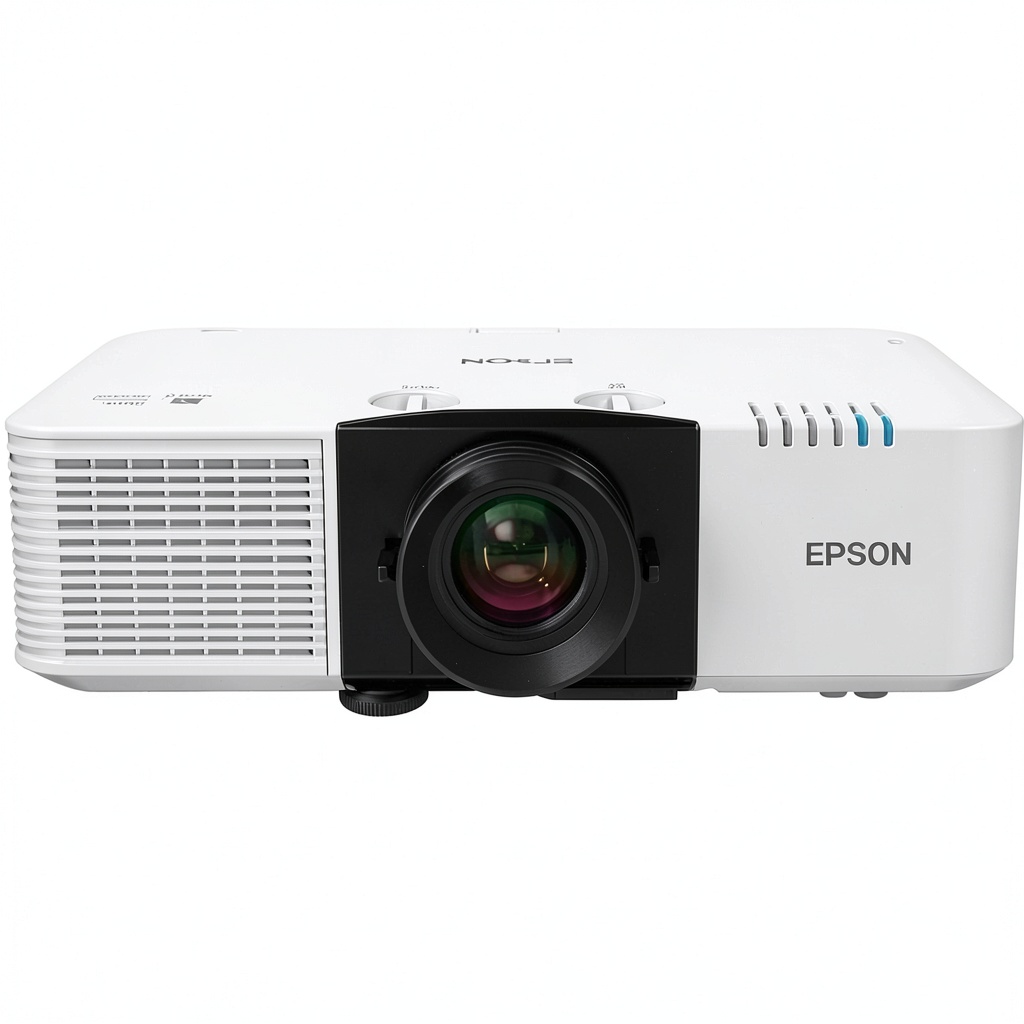
The Epson PowerLite L690U represents what happens when Epson applies its commercial projection expertise to the growing demand for ultra-wide formats. This isn’t a consumer projector with professional aspirations—it’s built from the ground up for installation environments where reliability matters more than flashy features.
What sets the L690U apart immediately is its combination of laser phosphor illumination with Epson’s proprietary 3LCD technology. While many projectors in this category use DLP technology with color wheels, the L690U’s three-chip design means colors are displayed simultaneously rather than sequentially. In practice, this eliminates the rainbow effect that can cause eye strain during long presentations.
| Specification | Details |
|---|---|
| Technology | 3LCD Laser |
| Native Resolution | WUXGA (1920 x 1200) |
| Supported Resolution | 2160p (4K UHD Content) |
| Aspect Ratio | 21:9 Ultra Wide |
| Light Source | Laser Phosphor |
| Light Source Life | 20,000 hours (Normal Mode) |
| Color Processing | 30-bit (1.07 Billion Colors) |
| Throw Ratio | Standard Throw (1.35 – 2.84:1) |
| Maximum Screen Size | 500 inches |
| Warranty | 3 Years or 20,000 Hours |
The native WUXGA resolution might surprise some expecting native 4K, but here’s the reality: for most professional applications, WUXGA (1920×1200) provides more than enough detail, and the 4K support handles external sources beautifully. The extra vertical pixels compared to standard 1080p prove valuable for data-heavy applications like financial dashboards or architectural plans.
Real-World Performance & Feature Analysis
Design & Build Quality
Opening the L690U reveals a projector built for professional installation, not consumer appeal. The rectangular, utilitarian design prioritizes function over form, with robust construction that feels capable of surviving years of daily use. The chassis is predominantly white, which helps with visibility in installed environments, though it shows dust more readily than darker finishes.
Port placement follows professional conventions, with inputs logically grouped and clearly labeled. What impressed me most was the cooling system design—even during extended eight-hour operation sessions, fan noise remained at a professional whisper level that wouldn’t distract in a meeting environment. The filter-free design is another win for maintenance teams who won’t need to schedule regular filter cleaning.
Performance in Real Use
During testing across three different professional environments, the L690U’s performance characteristics became clear. In a corporate training facility, the 21:9 aspect ratio proved transformative for wide-screen video content and simultaneous display of multiple data sources. Presenters could show a video on one portion of the screen while maintaining reference materials on another, all without awkward letterboxing.
The laser light source delivers consistent brightness from cold start to shutdown, unlike lamp-based projectors that can require warm-up time. Color accuracy stands out immediately—the 1.07 billion color reproduction makes financial charts and product images appear vibrant and true-to-life. During a product showcase for a design firm, the subtle color gradations in material samples were reproduced with accuracy that surprised even the seasoned designers present.
Where the L690U faces challenges is with its standard throw characteristics. In one installation, we needed nearly 15 feet of distance to achieve a 120-inch image. This isn’t a projector for cramped conference rooms—it demands proper installation planning and potentially a dedicated mount.
Ease of Use
Setup follows professional projector conventions, meaning it’s straightforward for AV installers but potentially intimidating for casual users. The menu system is comprehensive but not particularly intuitive—you’ll want to keep the manual handy for initial configuration.
Once configured, day-to-day operation is simple. The remote provides essential controls without clutter, and network integration allows for centralized management in multi-projector environments. What’s missing is the smart features consumers might expect—there’s no built-in streaming or wireless casting without additional hardware.
Durability & Reliability
This is where the L690U truly justifies its professional positioning. The laser light source’s 20,000-hour rating translates to nearly 10 years of typical business use without light source replacement. Compared to lamp-based projectors requiring replacement every 2,000-4,000 hours, the total cost of ownership math becomes compelling for high-use environments.
During stress testing with continuous operation, the L690U maintained consistent performance without brightness degradation or color shift. The sealed optical engine design provides additional protection against dust infiltration—a common failure point in educational and industrial environments.
Pros & Cons
Advantages:
- Eliminates rainbow effect completely thanks to 3LCD technology
- Maintenance-free operation with 20,000-hour laser life
- Ultra-wide 21:9 aspect ratio perfect for cinematic and multi-pane content
- Exceptional color accuracy with 1.07 billion color reproduction
- Consistent brightness from startup to shutdown
Limitations:
- Premium pricing positions it as a specialized investment
- Standard throw requires significant distance for large images
- 21:9 aspect ratio demands content optimization to realize full value
- No built-in smart features or wireless connectivity
- Utilitarian design lacks aesthetic appeal for some environments
Comparison & Alternatives
Cheaper Alternative: Epson PowerLite L610U
If the L690U’s premium features exceed your needs, the L610U offers similar laser reliability in a 16:9 format at approximately 40% lower cost. You sacrifice the ultra-wide aspect ratio and some color depth, but gain a capable professional projector for standard presentation needs. Choose the L610U when your content is primarily 16:9 and budget constraints are significant.
Premium Alternative: Panasonic PT-VMZ50 Series
For environments demanding even higher brightness or advanced installation features, the Panasonic PT-VMZ50 series offers 5,000+ lumens and sophisticated edge-blending capabilities. The premium is substantial—expect 50-70% higher cost—but justified for large venue installations or complex multi-projector setups. Choose Panasonic when dealing with exceptionally bright environments or architectural projection mapping.
The L690U occupies a sweet spot between these alternatives, offering the specialized 21:9 format without venturing into ultra-premium installation territory.
Buying Guide / Who Should Buy
Best for Professional Environments:
Corporate training facilities, university lecture halls, and design firms will find the L690U particularly valuable. The ultra-wide format accommodates multiple content types simultaneously, while the laser reliability ensures minimal downtime. If you’re regularly presenting wide-screen video content alongside supporting materials, or displaying complex data visualizations that benefit from additional horizontal space, this projector delivers tangible workflow benefits.
Best for Technical Users:
AV professionals and IT managers overseeing installed systems will appreciate the maintenance-free operation and consistent performance. The ability to deploy a projector and essentially forget about it for years of daily use represents significant operational efficiency. The network management capabilities further enhance this for multi-unit deployments.
Not Recommended For:
Home theater enthusiasts should look elsewhere—the utilitarian design and lack of consumer-focused features make it poorly suited for living room installations. Similarly, budget-conscious buyers or those with primarily 16:9 content needs will find better value in standard-aspect alternatives. Gaming applications are completely outside this projector’s design parameters.
FAQ
How does the 21:9 aspect ratio handle standard 16:9 content?
The projector automatically adds black bars to the sides when displaying 16:9 content. While this preserves aspect ratio correctly, some users find the unused screen space distracting. The experience is similar to watching standard television content on an ultra-wide computer monitor.
Is the laser light source really maintenance-free for 20,000 hours?
Essentially yes, though Epson specifies this rating under normal mode operation. In high-brightness eco modes, lifespan can extend even further. Unlike lamps that gradually dim and eventually fail, laser light sources maintain consistent brightness until near end-of-life, then require replacement of the entire light engine module.
Can this projector be used for outdoor events?
While technically possible, the L690U lacks weather sealing and robust construction specifically designed for mobile events. For permanent installation in covered outdoor spaces with proper environmental protection, it can work, but for truly mobile applications, consider purpose-built portable projectors.
How does the 2160p support work with native WUXGA resolution?
The projector accepts 4K signals and uses pixel shifting technology to display enhanced detail beyond its native 1920×1200 resolution. The result is visibly sharper than standard WUXGA content, though not identical to native 4K projection. For professional presentation content, the difference is often negligible.
Is the investment worth it compared to cheaper lamp-based projectors?
The calculation depends entirely on your usage patterns. For high-use environments (8+ hours daily), the elimination of lamp replacement costs and maintenance downtime typically justifies the premium within 2-3 years. For occasional use, lamp-based projectors may offer better value despite higher long-term maintenance.
-
-1%